Power and energy teams work across substations, plants, lines and remote equipment areas. The hard part is not collecting more data; it is getting the right context to the right person when a decision is needed.
5G INDUSTRIAL SAFETY / GLOBAL PROJECT SUPPORTPROJECT SUPPORT & GLOBAL DELIVERY
 CHANGZHOU BLUEGUANDING TRADING CO., LTD.BLUEGUANDING · AF-KANGMUAF-KANGMU INDUSTRIAL INTELLIGENT SAFETY EQUIPMENT
03
Power & Energy
Help dispersed inspection crews bring the right field context back to dispatch and technical support.
DISCUSS YOUR INSPECTION WORKFLOW↗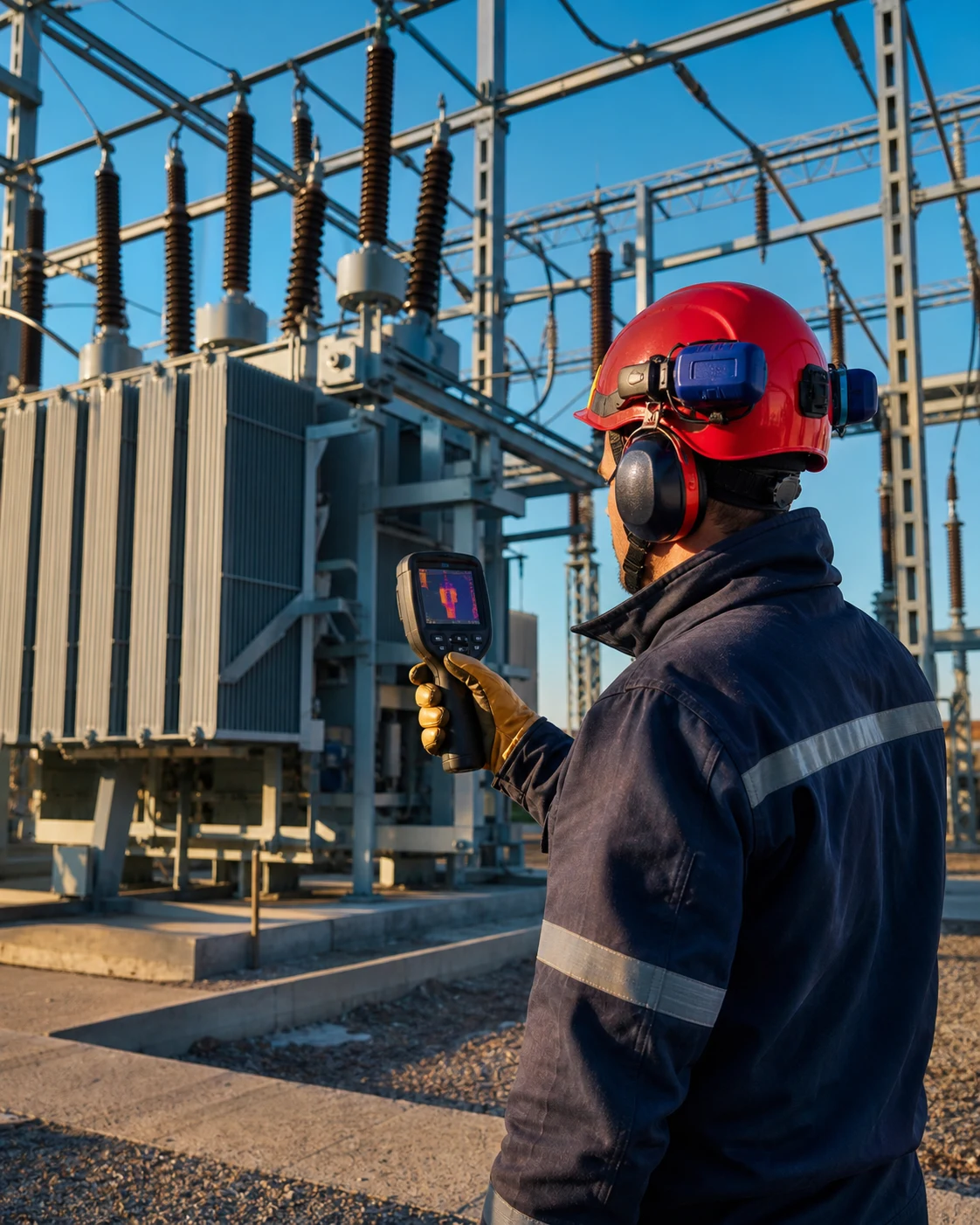
THREE THINGS THAT MATTER
01Keep remote crews connected
02Bring specialists into the moment
03Leave a clear inspection trail
START WITH THE REAL ROUTE
THE HARD PART IS GETTING THE RIGHT EXPERTISE TO THE FIELD IN TIME.
Inspection teams may be separated from dispatch, equipment specialists and the next site by hours of travel. A useful system shortens that distance without turning every inspection into extra administrative work.
SITES ARE SPREAD OUT
Substations, plants, lines and equipment areas may sit far apart. Communication and handoff methods need to work across the actual inspection route.
THE SPECIALIST MAY BE ELSEWHERE
When an inspector finds something unusual, available voice, images or video can help the right specialist understand the situation before anyone travels.
THE NETWORK CHANGES ALONG THE ROUTE
Indoor rooms, outdoor yards, remote assets and enclosed areas do not share one signal condition. Coverage and upload need to be checked at real equipment points.
HANDOVERS CAN LOSE THE DETAIL
A short verbal summary may miss what the inspector saw. Keep agreed observations, available media and follow-up results together in the project workflow.
HOW THE INFORMATION MOVES
LET THE PERSON WHO KNOWS SEE WHAT THE INSPECTOR SEES.
Connect the field worker, verified network and dispatch or technical support so questions arrive with enough context to act on.
Field inspection
Inspectors use the selected helmet configuration for communication, field reporting and the agreed inspection workflow.
Network & media
Communication coverage and media upload are tested along real routes and at actual equipment locations.
Dispatch & expertise
Dispatchers or specialists receive the field context they need and follow the agreed handoff and response process.
A DAY IN THE FIELD
FROM DEPARTURE TO HANDOFF, KEEP THE INSPECTION STORY INTACT.
The goal is not to collect everything. It is to preserve the few details that help dispatch, technical support and the next shift make a better decision.
BEFORE DEPARTURE
Confirm the inspector, device status, route, task and the people responsible for technical support.
ROUTINE INSPECTION
Use the communication and reporting method already verified for the site; selected accessories follow the agreed inspection task.
REMOTE JUDGEMENT
When a condition needs another opinion, send the available field context to the designated dispatcher or specialist.
RECORD & HANDOFF
Keep the key observation, response and outcome together so the next person does not have to reconstruct the event.

WHERE TO START01 02 03 04 VIEW MODULAR EXPANSION HELMET↗
MODULAR EXPANSION SMART HELMET FOR SPECIALIZED INSPECTION.
When an inspection project needs selected accessories or project-specific devices, the modular expansion smart helmet provides a practical starting architecture. The accessory, mounting, power, communication and platform behavior must be validated together before rollout.
START WITH THE INSPECTION TASK
Choose the accessory and information path from a real task instead of building a generic equipment package.
CHECK THE COMPLETE WEARING SYSTEM
Validate mounting position, balance, operation and power in the conditions where the inspector will actually work.
PROVE THE DATA PATH
Confirm whether the selected information can be captured, transmitted and viewed under the available network conditions.
KEEP THE HANDOFF SIMPLE
Send only the useful field context into a clear follow-up process that dispatch and technical teams can use.
ROLL OUT WITHOUT GUESSWORK
TEST THE ROUTE, THE NETWORK AND THE HANDOFF BEFORE SCALING.
Prove one inspection task end to end, then expand by site, team and equipment type.
MAP THE REAL ROUTE
Identify equipment points, weak-signal areas, indoor and outdoor transitions and the people involved in the handoff.
CHOOSE ONE INSPECTION TASK
Start with one repeatable scenario and define exactly what information would help the next decision.
TEST THE WHOLE SYSTEM
Validate wearing, accessory compatibility, power, communication, upload and operating time in context.
CLOSE THE HANDOFF LOOP
Confirm who receives the information, who follows up and what should remain as a project record before expanding.
PROJECT INQUIRY
BUILD THE CONFIGURATION AROUND YOUR SITE.
Share the country, industry, team size and required workflow. We will identify the right starting architecture before quotation.
START A PROJECT↗